
Reimagining Safety-Measuring Gun Violence Beyond Statistics

Updated: Dec 3, 2025
Why Measuring Gun Violence Is Essential
At Visioning Beyond Violence, we envision safety as a shared right, not a privilege, and truly believe visibility is the first step towards safety. We believe safety is not simply the absence of harm, but the presence of dignity, creativity, and shared community resilience. Our mission is to reimagine public safety through creativity, storytelling, and youth-driven education that makes data visible, personal, and actionable. By measuring not only incidents but also lived experiences, we ensure every voice matters, because true safety begins with being seen and heard.
Although firearm violence continues to devastate communities and families around the world, the United States faces a particularly significant challenge, with approximately 47000 lives being claimed by gun violence in a year.
Additionally, firearm deaths reveal social disparities across age and race, reminding us to embrace safety as a shared priority and ensure not one more innocent life is lost to gun violence.

Firearm incidents not only incite fear within civilians and survivors, but also prevent services from functioning fully, restricting access to education and healthcare. Hence, measuring gun violence could help policymakers and researchers to identify patterns, recognise victims, and offer adequate support to create safe neighbourhoods and enhance community safety. Since we can’t solve what we can’t see, envisioning the true impact of violence through reliable measures brings us closer to comprehending the scale, stories, and solutions concerning gun violence prevention. Unfortunately, adding to the devastating incidents that our country faces each day, recently, budget cuts were announced for life-saving gun violence research. This development has left doctors and researchers distraught, confused, and helpless. Due to the lack of accurate metrics for the violence, we are not sure about the number of lives lost over the years, but we do know innumerable lives have been altered forever. These freezes are especially painful today, given that the CDC’s budgets were cut to $0 in some categories, severely weakening critical data collection, such as non-fatal firearm injury tracking. Therefore, this restricts our ability to see and, hence, prevent violence.
To build a future where safety belongs to everyone, we need both reliable data and active community participation. Readers can support this work by contributing to VBV's programs, volunteering, amplifying survivor stories, and introducing our education and art-based projects in schools and community spaces. Every action, whether funding creative healing spaces or sharing research, helps transform awareness into collective safety and meaningful change.
Hence, it becomes increasingly important to continue supporting organisations such as Visioning Beyond Violence through donations that help fund research, storytelling, and outreach that bring us closer to a world where security belongs to everyone.
Supporting VBV means more than just raising funds. It means investing in awareness and education that foster compassionate, kind minds. In one recent initiative, we encouraged students to use variables and algebra to analyze data surrounding gun violence. This interactive activity not only helped them connect mathematics to real issues but also exhibited how learning can be a tool for empathy and understanding, building their theoretical skills and confidence in the classroom.
As we encourage communities to learn, question, and take action, we arrive at a larger challenge: how do we measure gun violence in a way that helps with community healing and allows us to reimagine gun safety?
Current challenges and flaws in measurement systems
Although organizations such as the CDC and the United Nations are developing databases to track these incidents, numbers alone fail to capture the full weight of human loss.
The primary method used to measure gun violence is police reports. These are based mainly
on two reporting systems: the Summary Reporting System (SRS) and the National Incident-Based Reporting System (NIBRS). This data helps us understand key figures related to gun violence, as it is based on both hospital data and police reports. Hospital data records gunshot wounds, but only captures part of the armed violence, as many incidents do not result in injury. It is therefore essential to measure non-fatal injuries while complementing police data to gain a comprehensive understanding of the phenomenon as a whole.

According to US police data, firearms are involved in approximately 28% of aggravated assaults and 36% of violent robberies, affecting nearly 300,000 people each year. This is where the differences in accuracy between the two measurement systems are most apparent: The switch to the NIBRS recording system allows for the detection of many more armed incidents than before (approximately 18% more assaults and 2% more armed robberies), representing nearly 65,000 violent incidents per year that were previously unreported. This is because the SRS only records the use of firearms when it occurs in the context of aggravated assault or robbery. These differences are significant and, once again, highlight the flaws in the SRS, because behind every statistic lie unseen victims or incidents overlooked by outdated metrics.
Today, our understanding of gun violence remains very incomplete, mainly due to missing data. We do not have data on sexual assaults, which may involve the use of firearms, as this option is not included in the reports. Additionally, the SRS employs the Hierarchy Rule, which states that when a crime involves multiple offenses, only the most serious one is recorded. This rule leads to underreporting of assaults, particularly those involving firearms.
Another apparent flaw in this system is that a crime involving multiple people is counted as a single incident. This is why we can say that police reports are limited.
However, NIBRS attempts to capture the full scope of violence. This system thus seeks to compensate for the shortcomings of the SRS. For example, it counts all crimes committed in each incident. It also records the total number of victims, without using the hierarchy rule. Despite all these improvements, it remains impossible to measure firearm-related injuries.
Once we have described the different ways of measuring gun violence, we might ask ourselves what the point of it is. Beyond the numbers, these measurements help us understand the social and human realities behind the data.
Measuring gun violence is not only about counting incidents; it is also about understanding the emotional, social, and cultural wounds left behind. At Visioning Beyond Violence, we combine research with creative expression to ensure that data lead to healing rather than become only statistics or headlines. By transforming numbers into stories, art, and youth-centered projects, we help communities process grief, reclaim agency, and imagine safer futures together.

When we think of gun violence, we tend to envision headlines involving targeted criminal incidents. Whereas, unfortunately, many lives are lost in moments of quiet and despair. Data suggests that approximately 55.4% of the suicides in the United States involve the use of a firearm. Therefore, this encourages us to view gun violence as a public health issue as opposed to solely a criminal issue.
Despite profound political differences, research shows that one goal remains generally shared: reducing gun violence. Reliable data is essential for identifying who is affected, how, and why. For example, firearm homicide rates reveal significant inequalities: Black adults in the United States are killed by firearms at a rate of approximately 29 per 100,000 population, compared to 2.9 per 100,000 among White individuals.
The graph below underlines the gun death rates for black and white emerging adults aged between 18 and 19, revealing societal inequalities hidden in national statistics.

Additionally, Black and Hispanic/Latino youth are burdened by firearm-related incidents, further raising questions about measuring racial disparity alongside armed violence.
Measuring gun violence, therefore, also means highlighting the disproportionate impact on marginalized communities. Additionally, this emphasises the importance of including age, ethnicity, and targeted communities as key metrics when measuring gun violence.
In summary, these measures do not serve solely to document a phenomenon: they are a tool for public and political mobilization, enabling us to move beyond descriptive analysis toward action-oriented research. This would help us propose concrete and targeted responses to reduce violence. This is what Visioning Beyond Violence seeks to do, particularly through art. Today, we are the only ones offering this way of raising awareness and helping victims move forward, because they are much more than just statistics and deserve appropriate support.
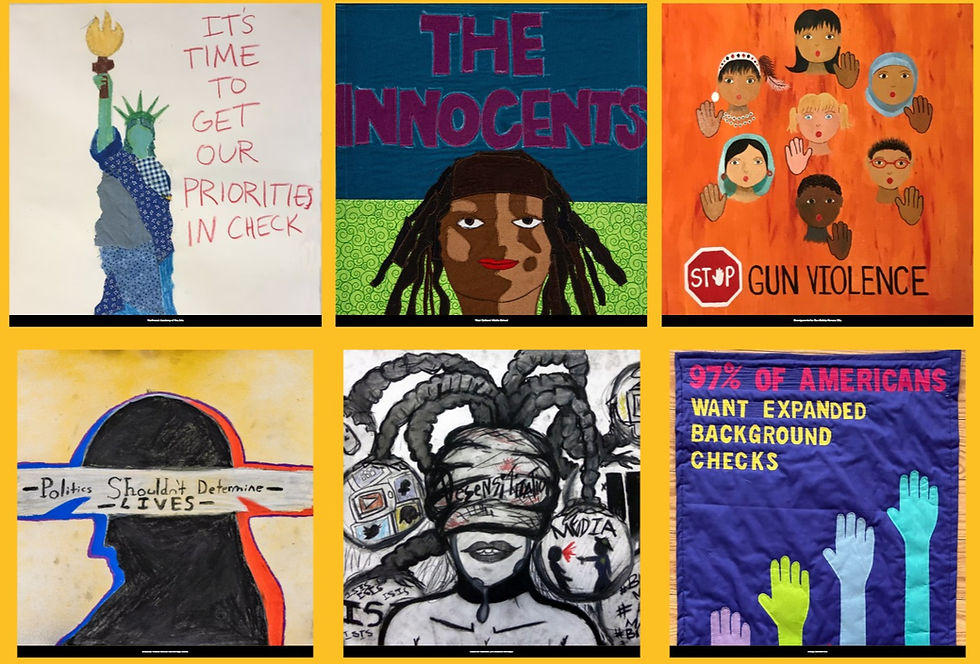
At Visioning Beyond Violence, we believe that art stands for more than expression - it encourages emotional healing that allows individuals to use creativity and imagination to create a safe space; reclaim stories, and process grief in ways that numbers alone can’t capture.


Comments